
KOT explained: what a kitchen order ticket is
A KOT, or kitchen order ticket, is the slip or screen entry that tells the kitchen what to cook for an order. It is separate from the bill: the KOT goes to the kitchen, and the bill goes to the customer.
What a KOT is and why it exists
When a customer orders, someone has to tell the kitchen. A KOT does that in writing, so the cook reads exactly what was ordered instead of relying on a shout across the room. It also gives the restaurant a record of what was sent to the kitchen and when.
What goes on a KOT
A KOT is short. It carries what the cook needs and nothing more. It does not need prices, because the kitchen is not billing anyone.
- The table number or the order number
- The time the order was sent
- Each dish, with its quantity
- Notes such as less spicy or no onion
- Sizes and add-ons that change how the dish is made
- For takeaway, a clear mark that it is takeaway
KOT and bill are not the same
The KOT is for the kitchen and the bill is for the customer. The bill shows prices, tax and the total, and it is the document the customer pays against. A KOT is not a bill and should not be handed to the customer as one.
In many restaurants a table orders in rounds, so one table can have several KOTs and one bill.
Printed or on a screen
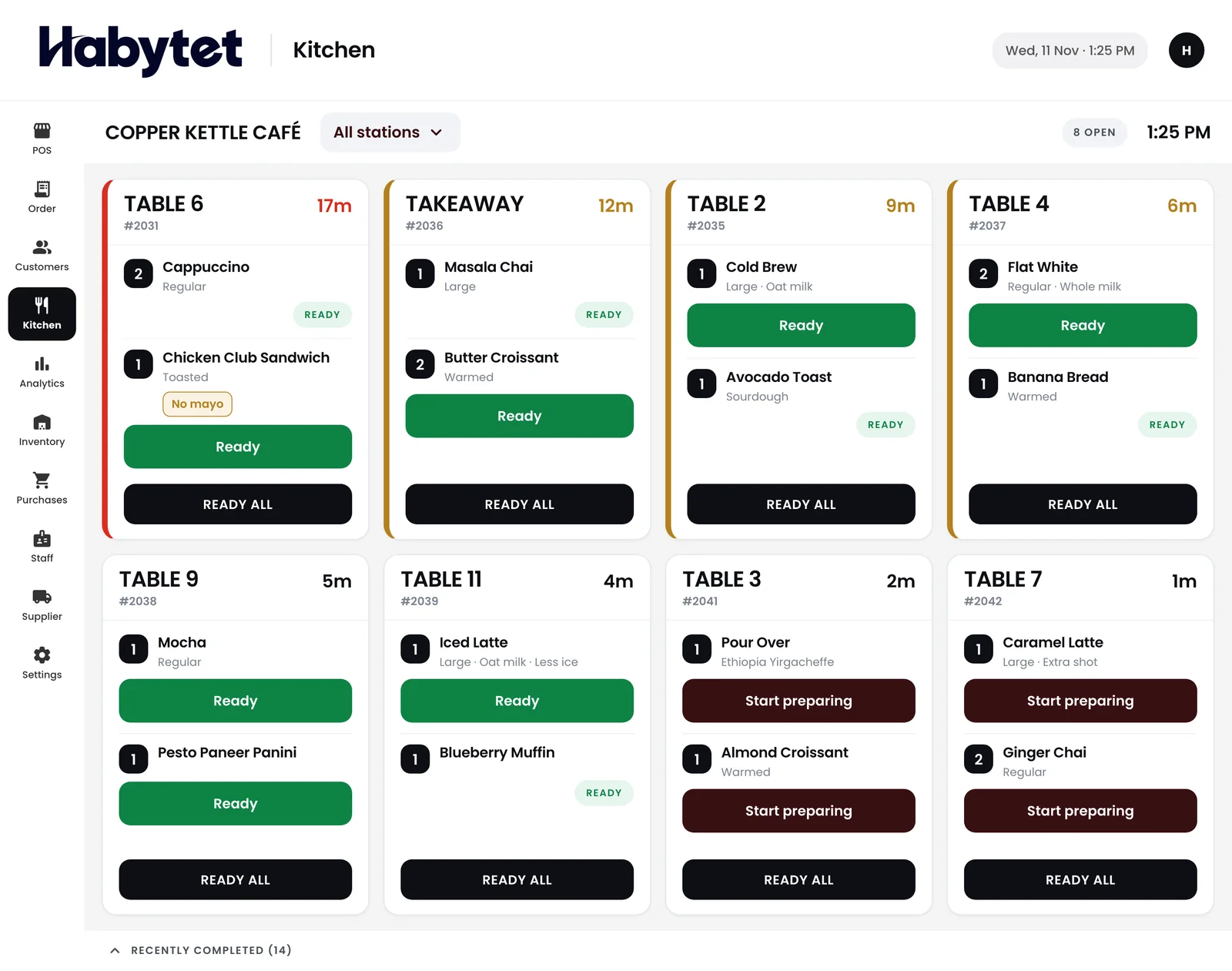
A printed KOT comes from a thermal printer in the kitchen. It is simple, and cooks can hold it or pin it up. A kitchen display shows the same information on a screen, where cooks mark each dish started and ready. Some kitchens use both. There is more on the screen option in what is a kitchen display system.
If your kitchen has sections, each should get only its own dishes, so a tandoor cook does not read through the juice orders.
How to avoid KOT mix-ups
Most mistakes come from the same few places. A few habits prevent them.
- Send the order to the kitchen before the customer pays, not after
- Add a new round as a new KOT, so the kitchen sees what is new
- Write notes on the order itself and not on a separate slip
- Have the kitchen mark dishes ready so the counter knows what is waiting
- Check that a cancelled dish is also cancelled in the kitchen
Where Habytet POS fits
Habytet POS prints kitchen tickets on a thermal receipt printer on the shop's network, with one ticket for each kitchen station the order needs. It can also show orders on a kitchen display, table by table. Menu items can have sizes and add-ons, picked as the item goes into the order.
An occupied table keeps its running bill, and new rounds are added to it.
Habytet products in this guide
Questions.
What does KOT stand for?
KOT stands for kitchen order ticket. It is the slip, or the entry on a kitchen screen, that tells the kitchen what to cook for an order.
Is a KOT the same as a bill?
No. A KOT goes to the kitchen and has no prices. The bill goes to the customer and shows prices, tax and the total.
Can a KOT be shown on a screen instead of printed?
Yes. A kitchen display shows the same order on a screen, and cooks mark each dish started and ready. Some kitchens use both a screen and printed tickets.
Does Habytet POS print KOTs?
Yes. The Android app prints kitchen tickets on a thermal receipt printer on the shop's network, with one ticket for each kitchen station the order needs.
See it running in your own business.
Tell us about your business and we will call you to set up a demo.
Thanks.
We will call you on .